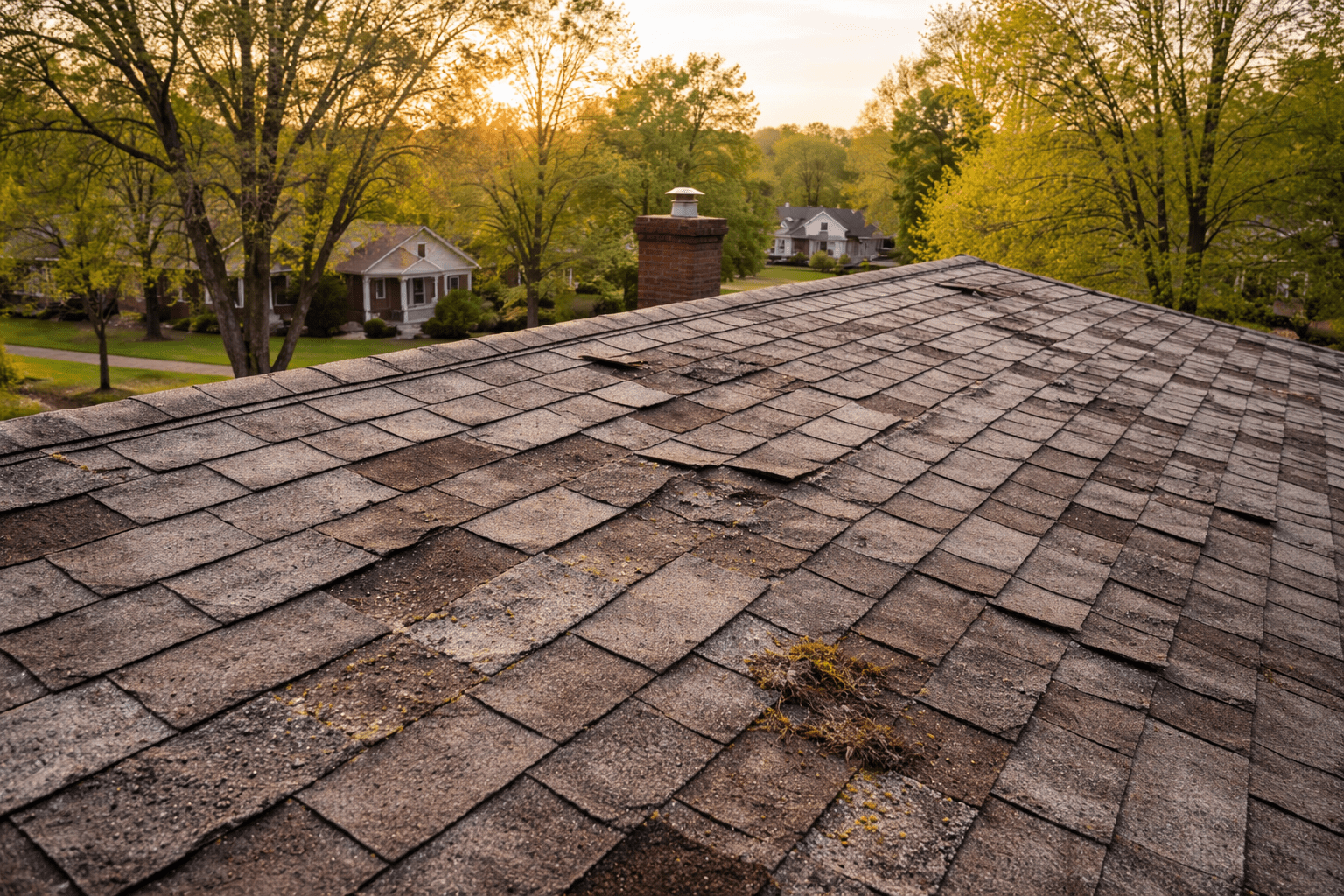
If you've been shopping for a homeowners' insurance policy and keep hitting roadblocks because of your roof's age, you're not alone. Knowing how to get homeowners insurance with an old roof is one of the most common concerns Louisville homeowners face, especially in a market where severe weather, hail damage to your roof, and ice storms push insurance carriers to scrutinize roof age more than ever. The good news is that having an older roof doesn't automatically disqualify you from coverage. It just means you need to understand what insurers are looking at and how to put your best foot forward.
Before an insurance provider will agree to cover your home, they want to know whether your roof is a liability. A few key factors determine how they assess it.
The age of your roof is one of the most significant variables in how homeowners' insurance companies set your insurance rates. Many insurers draw a firm line at 20 years for asphalt shingle roofs. A 20-year-old roof may still qualify for replacement cost coverage, but past that threshold, you're more likely to be offered actual cash value (ACV) instead. With an ACV policy, the insurance company factors in depreciation, meaning a covered loss payout reflects what your roof is worth today, not what it costs to replace it. That difference can result in high out-of-pocket costs after storm damage or a covered event.
Learn more about insurance with a 20 year old roof here: Will Insurance Cover a 20 Year-Old Roof in Kentucky?
Age alone doesn't tell the whole story. A well-maintained roof in good condition will be evaluated more favorably than a neglected one, even if both are the same age. Insurers look for:
A roof in poor condition signals further damage potential, which raises red flags for insurers when determining coverage limits and whether they'll offer a full replacement cost option or limited coverage.
The type of roofing materials matters. Metal roofing and impact resistant asphalt shingles made from durable materials typically earn more favorable terms than aging standard asphalt. The roof's shape also plays a role. Hip roofs, which have slopes on all four sides, are generally considered more wind-resistant than gable roofs, which can affect both insurability and insurance premiums in storm-prone areas like Louisville.
Before you contact a local agent or request homeowners insurance quotes, get an honest assessment of your roof's condition. Many roofing companies offer free roof inspections, including drone inspections that can identify issues not visible from the ground. Having documentation that your roof is structurally sound and well-maintained gives you a stronger position when talking to an insurance company.
Work with an insurance agent who understands the Louisville market. Be upfront about the roof's age and condition. Trying to obscure that information can lead to claim denials down the road. A knowledgeable local agent can help you navigate different factors across insurance carriers and identify which homeowners insurance companies are most likely to offer a reasonable level of coverage for older roofs in your zip code.
When you're reviewing a homeowners policy for an older roof, pay close attention to the loss settlement option. You'll typically encounter two:
If you can qualify for RCV coverage, it's worth the higher insurance rates. ACV policies may have lower premiums upfront but can leave you exposed when you actually need to file a roof insurance claim.
If your roof is borderline, it may be worth exploring a full roof replacement before applying for a new policy. A newer roof can unlock significantly better homeowners insurance coverage, lower insurance premiums, and stronger warranty terms. If upfront cost is a concern, some homeowners look into low-interest financing options or a home equity loan to fund the project. The long-term savings in insurance rates and the peace of mind that comes with reliable coverage often justify the investment.
Learn more about how a new roof impacts your insurance here: Does a New Roof Affect Insurance Premiums in Kentucky?
Even with an older roof, a standard homeowners insurance policy covers damage caused by a covered peril, such as fire, high winds, and hail. However, there are important exclusions to understand:
Your homeowners insurance policy covers damage to your home's structure (Coverage A), personal property coverage for personal belongings and personal possessions, and may include additional coverage options like loss of use coverage and medical payments. Review your policy's limit and coverage limits carefully to understand your full exposure.
Learn more about what kinds of roof damage are covered by insurance here: What Kind of Roof Damage Is Covered by Insurance in Kentucky?
Louisville homeowners deal with a challenging mix of severe weather: hail storms, high winds, ice storms, and occasional tornadoes. These conditions accelerate roof aging and make insurance carriers in this market particularly attentive to roof age and condition. A damaged roof going into storm season isn't just an insurance problem, it's a safety and financial risk.
Types of roof damage seen most often in Louisville include hail impact, wind-lifted shingles, and water intrusion from ice damming in winter. Staying ahead of these issues with regular inspections and prompt repairs is the most effective way to keep your homeowners coverage intact.
At 44 Roofing & Construction, we offer free drone roof inspections so you know exactly what condition your roof is in before you talk to your insurance company. As a GAF Master Elite certified contractor and Owens Corning Preferred installer, we help Louisville homeowners navigate storm damage, insurance claims, and full roof replacements with confidence. Our team will walk you through the entire insurance process, from inspection to claim to installation.
Contact us today to schedule your free inspection and take the first step toward protecting your home.